Stump the Priest - Questions and Answers on the Orthodox Faith
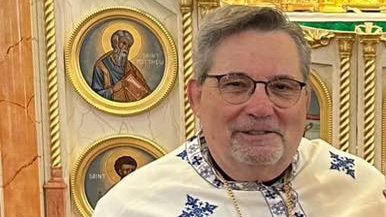 We welcome your questions on the Orthodox Christian Faith! Please submit your question to Fr. Joseph in the form below. We ask that you give us your name and contact information so that we can respond personally to you. Both your question and answer will be posted on line, WITHOUT the name of the person submitting it for your privacy. If you have any questions about the process before submitting a question please message us in the form below as well.
Questions and Answers
+++
Dear Father Joseph,
Can you explain why the dates of Easter differ between the Catholic and Protestant churches and the Orthodox Church.
Thanks,
Nicholas K.
Dear Nicholas,
This is a very common question asked around this time of year, and all too often, the answers given are not entirely correct. So, instead of me going on and on to answer, I would prefer to let you read what I think is an excellent answer.
Here you go, and I hope it helps. https://www.goarch.org/-/fordham-pascha
+++
Dear Pastor,
Why do Orthodox worship Mary? We should only worship God.
An Evangelical Protestant Christian
Dear Evangelical Protestant Christian,
Glory to Jesus Christ! Glory Forever!
I really appreciate you asking this question because there is a major misunderstanding of who the Virgin Mary is and how the Orthodox relate to her. It also relates to how Orthodox Christians understand Holy Icons.
First of all, you are correct, worship is ONLY deserving of God, the Father, the Son, and the Holy Spirit. Worship is the submission of oneself to God; veneration is the honor paid to a creature for God's sake. Thus, Orthodox Christians do not worship Mary, but we do honor her, the Saints, and the Angels. Sometimes, when Evangelical Christians go to an Orthodox liturgical service, they will see us bow down before an Icon of the Birthgiver of God (in Greek, Theotokos), meaning the God-bearer; they think that we are worshipping Mary. I like to tell the story of a soldier in a foxhole. You have seen movies in which a soldier in the midst of a battle thinks he may not survive. He pulls out a picture of his wife or sweetheart and kisses it! Of course, he is not worshipping that picture; rather his love is passing to the prototype, his wife or sweetheart. Similarly, Orthodox understand veneration is not worship. We venerate, we honor Mary, the Saints, we kiss their images/icons expressing our love and honor for her, as our Mother too, and the Saints, as our extended family members in Christ, that "great cloud of witnesses" as St Paul teaches. When we venerate on Icon of Christ, again, we are expressing our love and worship for Him, as God incarnate. We don't worship the icon, but rather we worship the one depicted; our worship passes from the prototype to the Type! Thus, kissing the icon is not idol worship but theology in line and color, a "window into heaven," where the material world touches the heavenly, where we give worship to God and venerate his Saints.
I hope this helps.
+++
Dear Fr Joseph,
I have a question for you. Why do the Orthodox practice "closed communion"? I have been to Protestant parishes where everyone is invited to take communion. Why don't the Orthodox?
Sincerely,
Confused.
Dear Confused,
Glory to Jesus Christ! Glory Forever!
Thanks for your question, and I hope my answer will clear up any confusion you have.
The practice of closed communion—where the Eucharist is offered only to baptized and chrismated Orthodox Christians who are prepared through confession and fasting—stems from our theological understanding of what the Eucharist is and what it signifies.
In Orthodoxy, the Eucharist is not merely a symbolic act or a communal meal of remembrance/thinking really hard about Jesus and the cross—though it does include elements of memory and fellowship. Rather, we believe it is the very Body and Blood of Christ, a mystery (or sacrament) through which we are spiritually united to Christ Himself and to one another in the deepest possible way. Therefore, the reception of the Eucharist is also a statement that those who receive it have embraced what the Orthodox Church teaches. It can never be reduced to an external means of unity, but it is the very action of the unity of the Faith and what unites Orthodox to one another throughout the centuries.
Fr John Breck expands on this beautifully, "
The Eucharist is life itself. It is the life of Christ that enables us to live our life in Christ. To participate in the Eucharist as we are called to do requires our acceptance of a doctrinal attitude and commitment that is specifically “orthodox,” grounded in the Scriptures and transmitted through the ages under the guidance and inspiration of the Holy Spirit. It requires, as well, acceptance of an ascetic discipline, which includes personal prayer, liturgical celebration, fasting, confession of sins, and acts of charity: the ingredients of a life of repentance and of an ongoing quest for holiness. And it requires that we honor our particular “ecclesial identity,” together with submission to ecclesial authority represented above all by our bishops: persons canonically ordained and established, who are called by their actions and teachings to preserve and transmit the truth of the Orthodox faith while maintaining a bond of unity within the Body of Christ. A unity grounded not in power but in mutual respect and fraternal love, shared by all members of the Church.
From this perspective, “open communion”—the welcoming of non-Orthodox to share in the Eucharistic celebration—is simply not possible without undermining the very meaning of the sacrament. This implies no particular judgment on the Eucharistic services of other Churches. It acknowledges rather that for the Orthodox, the Divine Liturgy is what the name implies. It is both the means and the end of Christian existence, an existence which arises from Orthodox faith, ongoing repentance, ascetic discipline, ecclesial identity and works of love. To those who accept this “Orthodox Way,” the Eucharist offers a true participation in the very Life of the risen and glorified Christ, just as it offers the forgiveness of sins, the healing of soul and body, and a foretaste of the heavenly Banquet in the eternal presence of God."
=. =